Thursday, November 3, 2011

Harvest 2011

Whew . . . It's been a whirlwind of a harvest this year.  So much so that I've been a bad blogger for quite some time.  While we nosed into corn the last week of September it was still a bit too wet (30% moisture) so we had to wait until mother nature had done her part by Oct. 1.  Since then we've been hard at it every day around here.  Here it is Nov. 3rd and I've got a few hours of free time!  I probably should go take a nap but since I haven't posted in forever (and since I'm a terrible nap-taker) I thought I'd share how harvest has been going.

This year it's been a challenge.  We have quite a bit of root-lodged corn.  Root lodging is what takes place when a high wind tips the corn plant over due to poor root strength.  The severity of lodging is directly affected by wind speed, soil saturation, stage of crop development, etc.  This year we had an 80mph wind on July 11th.  Called a derecho, it was a wide-spread, continuous wind that caught a lot of our corn at a very vulnerable growth stage as they had rapidly grown in height (6+ feet tall) and leaf area but hadn't yet formed the root bracing needed to anchor themselves to the ground.  Some fields were nearly laid flat.  Given some sun and favorable growing conditions the plants attempted to straighten toward the sky but in the process created a "gooseneck" at the bottom of the plant.  This "gooseneck" makes harvesting a real challenge.  Corn yields suffered too (probably around 10%) as the plant was forced to expend energy on regrowth rather than kernel development.

Coupled with the down corn have been a number of mechanical misfortunes this year.  Not sure why -- bad luck I guess -- as we thought we were well prepared going into the harvest season.  Usually we trade -in our combine after about 5 years for a newer model because experience shows that after about 5 years the mechanical reliability of the machine begins to suffer.  For a variety of reasons this year we decided to wait one more year.

Bad call.  By the time harvest is over it feels like I will have bought my new combine after all.

One part at a time.

Now I'm not sure what to do for next year.  So many things are newly fixed and the re-investment rather large, yet I lack confidence in the machine.  What's next?

Anyway, we've got about a week to 10 days left.  As long as the rains stay away and we keep the snow at bay we should be able to celebrate a Happy Thanksgiving.

And one of the things I will be most thankful for is being done with this harvest.

Tuesday, July 26, 2011

Setting the Record Straight

For those of you who know me, most understand that I have never been a supporter of direct farm subsidy payments to farmers.  It's a complicated issue, but in a nutshell I have always felt it is a poor use of taxpayer money.  Nevertheless, farmers like me have received them for years as an inducement to enroll in the federal farm program -- which has significant controls on the manner in which I operate my farm.  It is a carrot and stick approach to land management and food production -- and one that I feel I must participate in in order to stay competitive with other farmers also receiving subsidies.

However, given the recent budget battles I think it's time to help non-farm folks understand something important.  Eliminating farm subsidies are a red herring when talking about meaningful deficit reduction in the federal budget.  Here are some facts:

  1. TOTAL federal "Farm Program" spending amounts to about 2% of the annual federal budget. 
  2. Of that amount 75% of those dollars are used for food stamps, nutrition programs, school lunches, etc.
  3. The remaining 25% (or roughly .5% of the annual federal budget) goes to farmer or farmland related programs.
  4. Of THAT .5% roughly 25% (we are now down to about .16% of annual federal budget expenditures) goes to farmers in the form of DIRECT FARM SUBSIDY PAYMENTS.
  5. Corn farmers like me receive approximately $24 per acre each year which immediately gets capitalized into the expense side of the ledger in one way or another.  It is not "free money" I keep.  Generally it gets spent on land.  In other words land owners get most of it (many of whom are not farmers).
  6. This $24 in direct payments is a small fraction (less than 2.5%) of the total gross revenue earned on an acre of Illinois corn ground.  It is really rather unimportant.  A 15 cent move in the price of a bushel of corn (an often daily occurrence) has more impact.
What I am saying is this.  Go ahead.  GET RID OF THE ENTIRE DIRECT FARM SUBSIDY PAYMENT PROGRAM.  I'm all for it.  You should be too.  BUT DO NOT FOR A MINUTE THINK THIS WILL HAVE A MEANINGFUL IMPACT ON THE FEDERAL DEFICIT.  It's just too small.  It makes for good politics.  Farmers are a small voting block.  The ag sector of the economy is generally doing well.  

Farmers are an easy target.  But we are not an easy solution.

Meaningful deficit reform will really only come from SHARED SACRIFICE.  Farmers will do our part.  But we all need to play a role.  Entitlement programs like Social Security, Medicare, Medicaid, public employee pension programs, military spending etc. are where the meaningful budget cuts MUST take place to have an impact.  They are where the $ is.  Thanks to our leaders in Washington our deficit spending is now roughly 40% of our annual budget expenditures.  I wasn't a math major in college, but I'm not sure how .16% can plug that hole.

Don't be misled by popular rhetoric.  Demand real change!

This Budget Pennies video is a great demonstration of the point.

Thursday, May 12, 2011

. . . And Now We're Done!

It's official -- we're done planting!  We finished yesterday just before the rains hit.  As we pulled out of the field, the rain began falling in earnest.  In fact, we got caught in a hailstorm on the drive home.  It was a new record for us:  3,000 acres of corn in just over 9 days.  We are all exhausted!  Thanks to multiple shifts, reliable equipment, a great weather window and dedicated employees the 2011 corn crop was planted in record time.

Time for a nap.  Then I gotta go spray . . .

Thursday, April 28, 2011

. . . And Still With the Waiting

Tomorrow will make it 2 weeks.  2 weeks since we last turned a wheel in the fields.  My anhydrous ammonia applicator sits parked.  Idled tractor.  Idled hands.  Making busy work and counting the raindrops.  We are meeting today to discuss "plan B" in anticipation of an eventual clearing of the weather.

For those wondering what "plan B" is for us, it's the adaptation of a compacted planting schedule.  Basically think double shifts.  In our area,  the general rule is corn planting should be complete before the 10th of May.  After that date, final yields decrease in an accelerating linear pattern, beginning with about a 1 bushel/day decrease.  (1 bu. x $6.00 x 3,000 acres = $18,000/EACH DAY).  You can easily see why farmers hate delays and why timely planting is so important.  The more we get planted prior to May 10th the better.  Normally we can plant around 300 acres/ day or a little more in a 12-14 hour work day.  This year we will shoot to lengthen the day to 18-20 hrs when possible.  Hopefully this will help but is obviously taxing on people and equipment.

And then again, maybe the rain will keep falling.

Wednesday, March 30, 2011

And Now The Waiting

Every year around this time we farmers tend to get a bit nervous.  Not nervous, scared, mind you -- excited nervous -- the pent up all winter long kind of nervous.  You know what I mean.  We know spring is almost here.  We are busy preparing.  Working on equipment.  Ordering final supplies.  Uploading computer data. Arranging schedules.  Fitting in last minute meetings of importance.

Soon the dirt will fly.  In our shop we are busy modifying our anhydrous ammonia applicators to make them more accurate and just a bit more efficient.  We've gone over every bearing, every hose, every connection to make sure there are no problems -- nothing to slow us down.  Looking out the window of the shop I can see that the surface of the soil is drying off.  It's still too wet underneath but with a few days of warm, dry sunshine that too will change.

The hardest part sometimes is the waiting.  It's time to get dirty.

Thursday, March 3, 2011

Interesting Corn Facts

S. 

  • One bushel of corn weighs 56 pounds. That means U.S. farmers produce an average of more than 9,000 pounds of corn per acre.   Walter Farms produces over 11,000 pounds of corns per acre.
  • If U.S. farmers used crop production practices from 1931 to produce an amount of corn equivalent to the 2008 crop, it would require 490 million acres—an area more than 120 million acres larger than the state of Alaska.  Instead in 2008 only about 86 million acres were needed.
  • The U.S. produces about 40 percent of the world's corn – using only 20 percent of the total area harvested in the world.
  • In 2011 Walter Farms will grow 99 million corn plants on its 3,000 acres of production.
  • Individuals or families own 82 percent of corn farms. Another 6 percent are family-held corporations.
  • Less than 15 percent of U.S. corn acres are irrigated.  We use none.
  • Farmers today produce 70 percent more corn per pound of fertilizer than as recently as the 1970s.
  • Corn farmers have reduced total fertilizer use by 10 percent since 1980.
  • According to the USDA, one acre of corn… removes about 8tons of carbon dioxide from the air in a growing season…at 180 bushels per acre produces enough oxygen to supply a year’s needs for 131 people.
  • The corn grown on Walter Farms removes 48 million pounds of carbon dioxide from the air each year and produces enough oxygen for roughly 400,000 people to breathe.  At the same time it produces enough food and feed ingredients each year to feed a town of about 1,500 people.
  • Corn production has marched steadily upward for decades while using fewer acres.
  • American farmers produced the five largest corn crops in history during the past five years. Even after supplying food-makers, ranchers, ethanol producers and grain exporters, America will again be able to save 10 percent of this year’s harvest for the future.
  • Farmers today grow five times as much corn as they did in the 1930s — on 20 percent less land. That is still 13 million acres, or 20,000 square miles, twice the size of Massachusetts.
  • The yield per acre has skyrocketed from 24 bushels in 1931 to a national average of 154 now, or a six-fold gain.
  • Walter Farms yield per acre is even higher.  Now at nearly 200 bushels per acre, we have seen a steady average annual increase of about 1-2%.  At the same time we have continued to reduce the fertilizer, fuel and chemical use needed to produce each year's crop.
Sources of Information: USDA ERS, FAO, EPA, USDA Census of Ag, USDA FAS and NCGA.

Thursday, February 24, 2011

Why Corn?


A couple of days ago I had the opportunity to visit with a very pleasant woman with a very interesting job. She's involved in community wellness and was particularly interested in trying to promote healthier eating in our schools.  As readers of this blog know, it is an interest of mine as well. Jamie's Food Revolution (His Not Mine). But as we visited it quickly became apparent that as farmers we need to do a better job explaining to people why we grow what we grow.  What often seems obvious to us is decidedly not so to much of our consumer public.

In our conversation she was eager to understand why farmers like me weren't working hard to grow fresh veggies and fruit for the dietary needs of our local schoolchildren.  There IS (thankfully!) a movement afoot to get healthier, fresher, less-processed food into our schools and she obviously felt a perfect storm existed where our local farmers could shift their production to such food and supply a great local market.  In her mind it was a WIN-WIN.

If only it were that simple.

And there lies the rub.  I think many good-intentioned consumers mistakenly think it is that simple.  They want to eat fresh, eat organic, eat locally-grown.  Oh, and don't forget -- they want to eat affordably too!  And make sure everyone else in the world has plenty of food they can buy and eat too.

This is why farmers need to speak up.  We need to explain ourselves.  We need to explain to consumers that there needs to be efficiencies in production.  There are real differences between the soils, climate, infrastructure, markets etc. that allow certain foods to be produced in certain geographies.  There are important reasons I grow corn and not cauliflower in Northern Illinois.  Likewise a California cauliflower producer probably shouldn't be growing corn either. Our short growing season, our temperatures, our soils, or insect and disease profiles, etc. do not favor growing fresh market fruits and veggies.  Sure we could grow some for a short period of time during the summer.  But what do we eat the rest of the year?  And what do we do about the fact that because of my climate, soils, insects, diseases etc. I can only grow half as much cauliflower as that farmer in California?  At the same time, the farmer in California can't efficiently grow corn.  He might only get half the crop I can get and doesn't have the natural rainfall nor infrastructure to handle the huge volume of commodities produced.

Sure, I'm over-simplifying here.  Global food production is immensely complex.  But over time markets have a way to naturally adapt to create efficiencies.  I grow corn here because there are few places in the world where someone else could grow as much, as cheaply, and as able to transport it around the world to those who need it.  Bucking those natural efficiencies can be done.  I can grow cauliflower.  I can supply fruits and veggies to my local farmer's market.  I can even grow organically.

But there is a cost to our global society in doing so.

The next time you see a hungry child in Africa or a food riot in the Middle East, pause for a moment and think about the organic cauliflower you bought at your local farmer's market.

Was it worth it?

Saturday, February 19, 2011

Budgets and Farmer Subsidies

Gulp.

I have said this before to any who would listen, but this is the first time I have written these words, for the record, in a public forum.

Farm subsidies in the form of direct payments to farmers need to go.

They are bad for the industry, bad for farmers and bad for taxpayers.  They are an easy mark for the media,  the socio-political elite, and the under-informed public.  They get all the attention in the "multi-billion dollar" farm bill yet are only a very small part of the overall spending -- a distant cry from the food and nutrition support (food stamp) portion of the bill.  At today's prices they amount to less than 3-4% or so of the gross income on every acre of grain production.  Even then, ag economists are generally in agreement that they are capitalized into the expense side of the production equation (especially in land costs).  Yet the general public sees them as "income" or welfare payments to farmers.  They are not.  Famers merely pass them along to landowners, equipment manufacturers and other input suppliers.

Farmers are rightly seen as frequent fiscal conservatives.  As a group we tend to tilt to the right, favoring free trade, smaller government, and reduced market intervention.  Yet when talking about direct payments, farmers, our industry representatives and farm belt legislators tend to circle the wagons.

Direct payments are not a sacred cow.  Nor should they be -- especially not now.  Budgets at the federal, state and local levels are a mess.  Some would argue that direct payments are such a small part of the overall budget mess that the public is being misled as to their overall significance.  I couldn't agree more -- and that's part of my point!  We need to focus on the big-ticket items.  Medicare/Medicaid, Social Security, meaningful Health Care reform, military and public-sector employment spending.  Direct Payment ag subsidy spending IS a drop in the bucket.  Focusing on it is a game of smoke and mirrors.

Am I against all public spending support of agriculture?  Not necessarily.  There are some expenditures which I believe the public gets a positive return on their investment dollar.  Crop insurance, some conservation programs and (historically) renewable energy.  Even then, I think we need to take an honest look at them and do a better job of justifying their continued need.  In future blog entries I will try to discuss the merits (or lack thereof) of some of those programs.  But for now, I intend to put my money where my mouth is -- literally!

Direct Payment subsidies for all farmers should go.  And the sooner the better.

Sunday, February 13, 2011

Grain Exports

I just got back a couple of days ago from the U.S. Grains Council annual meeting in New Orleans, LA.  The Council is an organization composed of stakeholders of the export industry doing business in barley, sorghum and primarily corn.  Several hundred smart folks were there (most unpaid volunteers) doing their part to promote the export of the corn I, and so many farmers just like me, produce every year.

It is an exciting time in agricultural exports.  Currently farmers export about 2 billion bushels of corn every year -- that's about 15% of our annual production.  United States farmers produce almost 40% of the global supply of corn every year.  Our exported corn goes all over the world, but mostly to destinations in Asia.  Important trading partners include Japan, Korea and increasingly China.  There is growing talk about the prospects of increased exports to India too.  The basic idea is this -- as people in third-world countries experience increasing economic success one of the first things they spend their rising incomes on is improving their diet.  Usually this results in a rapid increase in the amount of animal protein consumed.  In other words, meat becomes more of a staple food rather than a rare treat.  It takes grain (such as corn) to feed these animals (like chicken, pork and beef) and many of these countries do not have the ability to produce this grain in sufficient quantities internally.  Hence the need to import.

This shift to the "middle class" in countries like China and India are HUGE!  That's a market with over 2 billion people!  This shift is the basic cause of much of the increase in food prices around the world -- more so than ethanol, inflation, energy prices etc.  It is the basic law of supply and demand.

While in New Orleans I also had the ability to visit the Zen-Noh Grain Exporting Terminal.  This is the largest single grain export terminal in the United States.  Typically they unload barges and trains from the interior U.S. filled with grain and then load ocean going vessels with that grain for destination primarily to Japan and SE Asia.  They can unload around 30 barges and load a 2 million bushel ship simultaneously in roughly a 24 hour period.  They move almost 400 million bushels through their facilty annually, 24 hrs./day, 364 days/year.  Below is a video of their barge unloading and logistics center.

Thursday, January 27, 2011

Precision Guidance

Our Agrivator group (more on that another day) is arranging a demo-day for several companies that sell precision farming equipment.  I had somebody ask me recently if guidance/autosteering really pays.  The answer is a resounding "YES!"

By using GPS, we can dramatically improve efficiency.  It allows us to reduce overlap, increase speed and decrease operator fatigue.  This saves a bunch on inputs (fuel, seed, fertilizer, labor etc.) and helps us get more out of the very expensive equipment we run over our fields.  At the same time, we're able to be a little gentler on our environment too! Below is a little video of a common device.

Thursday, January 20, 2011

It's Alive!

Yep.  Still here.  Blog not dead.  Am working to resuscitate.  Yesterday went to listen to Troy and Stacy Hadrick of www.advocatesforag.com/.  You may have seen Troy's "Yellow Fail" video on YouTube.  If not check it out:


Troy and Stacy gave an excellent presentation on social media for agriculture.  As a follow up, today I participated in a National Corn Growers Webinar on the same topic.  Suffice to say, I am becoming a true believer.  Truth be told, however, a big reason I have failed to post for some time is that I have struggled with feedback.  It takes time to put together cogent thought and I wasn't sure I was getting any meaningful Return on Investment.  Without comments on this blog I had no way to track whether anybody cared.  And maybe they don't -- but yesterday and today convinced me I should try again and should invest in some new tools (to me) that until now I had avoided.

Get ready Facebook (and maybe even Twitter) another newbie is coming.

Wednesday, September 1, 2010

Summer is Over

With school back in session, and "paternity leave" from this blog finally over, it looks like it's time to get back to some posting.  It's been a busy summer full of applying herbicides, scouting crops, attending meetings, taking a family vacation etc.  The crop has had generally good growing conditions -- a bit too wet for the first half of the season -- and a bit too warm for the second half.  The hot summer has rapidly matured the crop.  (Simply put, heat ripens the corn, but sunshine makes the kernels bigger.  Hotter days = quicker to maturity = somewhat smaller ears/kernels).  We are still looking forward to a very good crop.

We expect harvest to begin as early as sometime next week.  That will be our earliest start ever -- and a full 5-6 weeks earlier than last year!!  We generally like to start harvesting when the corn is around 25-27% moisture.  Right now we have some down to just under 30%.  With warm sunny weather the corn can drop as much as 1% of moisture/day or even a bit more.

As I read the paragraph above I am reminded of last year.  Much of the corn never got below 30% moisture -- we were still harvesting corn that wet in December!

Monday, May 24, 2010

Welcome to the World


Today is an exciting day here on the farm!  We are pleased to welcome a new addition to our family -- Danielle Suzanne Walter was born this morning at 7:59, tips the scales at 7bls. 6oz. and measures out an even 20".  She joins her older siblings Sydney and Joshua and is resting comfortably.  As is her mother.

We are truly blessed.

Sunday, May 16, 2010

Too Much of a Good Thing


I suppose I should have known we were off to just too good of a start this year.  3 rainstorms in 7 days totaling over 5.5" didn't do us any favors.  The last 3" fell on already saturated soils and just couldn't get away fast enough.

Most people without a farm background around here don't know it, but most of the fields in this geography are underlaid with miles and miles of drainage tile to help with sub-surface drainage.  Most of these tiles are installed between 24-72" deep and are between 4"-12" in diameter.  Typically they connect to one another and empty into an outlet such as a stream or drainage ditch.  Of course they flow by gravity and can only handle so much water in a given amount of time.  Too much, too fast this time.  Many of these tile are nearly 100 years old, made of clay and were installed by hand.  Often, there are no good records to show their precise location.  Typically we discover them when they quit working right.  Modern tile we install today are usually plastic and mapped using GPS so we know exactly where they are.


The big question now is what kind of mortality rate will we see.  Small corn (and soybean) plants like these can survive submerged under water for roughly 48-72 hrs.  After that, most don't make it.  As I write this, we have passed the 72 hr. mark and while much of the ponding is gone there is still plenty of standing water left in some areas.  The next question will be whether to try to replant these areas.  It's a bit of a crapshoot.  First they have to dry out enough to support the equipment (and there is more rain in the forecast tonight).  Then they have to be replanted early enough so that the plants won't be too far behind the rest of the field to reach maturity.  The whole replant scenario will cost over $100/acre to undertake as well.  And finally, you hate to go through all the work and expense only to have the replanted corn drown out again in a few weeks.  And even if it does make it, yields will likely be greatly reduced in those areas.  Fortunately we are facing this decision on less than 5% of our total acreage.

Any opinions?

If there was any silver lining in the after-math of the rainstorms it was this.  Sometimes mother nature has a way of bringing a tear to your eye.  And other times, she brings nothing but a smile. . .

Wednesday, May 5, 2010

Planting Finished


It's hard to believe that 1 year ago today we started planting our 2009 corn and soybean crops.  It was our latest start ever.

Today we finished planting soybeans.  It is our earliest finish ever.  This is despite the fact that we picked up some custom (for hire) fieldwork and added an additional 800 acres over what we planted last year.  Much of the corn is out of the ground and off to the races.  Early herbicide applications are nearly complete and seed sales are basically over.  Somebody pinch me!  It's a good year to finish early too -- in less than 3 weeks our family will be blessed with a new addition (and my wife Kristen says she's plenty ready too).

Here's hoping 2010 continues to make up for last year!

Friday, April 30, 2010

Jamie's Food Revolution (His not Mine)


Anybody talkin' 'bout the Revolution?  Jamie Oliver's Food Revolution that is.  Perhaps you saw the conclusion to his ABC series last week on t.v.  My wife and I watched every episode and frankly we were impressed.  For those that didn't catch the series, the gist of it was that Jamie Oliver (aka "The Naked Chef") was trying to promote a healthier diet through better cooking, the use of fresher and more diverse ingredients and a return to the family dinner.  Sounds simple enough and certainly within his wheelhouse.

At first, we were suspect.  I originally started watching the program concerned that a celebrity chef was about to hit the public over the head with a bunch of suspect science regarding their food and how it is grown and prepared.  For the most part, that didn't happen.  Instead I came away encouraged that Mr. Oliver was truly trying to make a difference.  Sure, it was a t.v. show.  But by the end I was convinced that he was trying to use the show as a vehicle for his message, and not the other way around.  The show spent much of the time looking at the school lunch program in a West Virginia town and trying to improve it.  His goal -- replace the pizza, chicken nuggets, fries and flavored milk with more wholesome and balanced fare.  Fresh veggies, fruits and meats prepared on site for the kids.  And get rid of all the sugar and flavored milk (as much as a can of soda).  While focused on the schools, he also spent a lot of effort educating the community about fresh, healthy food prepared and eaten at home with the family. 

Amen, brother.

Our nation has an obesity problem.  A full quarter of us fit that definition.  We didn't get there overnight, either.  Somewhere, between the working, running and texting we forgot how to eat.  Think of it like a three-legged stool.  WHAT we eat.  HOW MUCH we eat.  WHAT WE DO WITH what we eat.  

Society has confused healthy eating with "Organic," "All-Natural," "Grass-Fed," "Low Fat," "Low Sugar," etc.  For the most part it's not.  Think back to how Grandma used to cook (o.k., maybe minus the lard).  A variety of mostly fresh food prepared from scratch, eaten at home with the family -- and in moderation.  For the most part our kids weren't obese, they learned how to cook and they knew where their food came from.  And as a side benefit the family spent quality time together.

Join me in supporting Jamie Oliver's Food Revolution.

Thursday, April 29, 2010

Corn Planting Finished


Sorry I haven't posted the past couple weeks -- we've been kind of busy! Today we finished planting corn!! I think I've said it in each of my last several posts but it bears repeating again -- What a difference a year makes!  Today is only the 2nd time in the past 40 years that we have finished planting corn in the month of April.  Last year because it was so wet and cold we didn't start planting corn until May 4th.

These pictures were taken last week.  Before we can plant first we must prepare the seedbed by leveling and mixing the soil several hours before planting.  We use a field cultivator (above photo) to accomplish this task.  After this spring tillage pass, we then plant the field using a 24 row John Deere bulk fill planter (top photo).  With this setup we can plant anywhere from 250-350 acres/day depending on field size/shape, road-time and how long we want to work.  Usually we put in around a 14 hour day.  This year we didn't have to push too hard.  With the advent of auto-steer (see previous posts), dust, darkness and operator fatigue are no longer serious problems.
With larger equipment, more acres and fewer people, we have moved away from individual seed bags (roughly 50lbs. each) to bulk fill seed.  This reduces handling, speeds filling the planter and helps reduce operator fatigue.  The seed corn is loaded in large boxes (above photo) on a specially designed trailer that weighs and conveys the seed into the large yellow tanks on top of the planter. A fill takes about 15 minutes.  Once filled the bulk planter can plant around 200 acres.  Before bulk, we would have to spend 1/2 hour every 75 acres to fill the planter.  Bulk saves A LOT of time!

We plant the corn seeds about 1.75" deep and about 6.5" apart within the row.  Each row is 30" wide.  It always amazes me when I think about how many seeds we will plant in a single season.  This year we will plant about 34,000 seeds/acre.  That's 75 million corn plants on our farm this year!

The first corn we planted (on April 14th) is just spiking through the surface today.  Planting conditions have been nearly perfect this year and we expect a very high emergence (survival) rate.

Beside planting we have also been busy delivering seed to other farmers (a sideline business is seed sales) and spraying herbicides to keep our weed populations under control.  Yes, we use chemicals and are not an organic farm.  Done properly it is a safe and efficient way to maximize the production of a healthy and affordable food supply.  I plan to write more on that topic (and discuss the Jamie Oliver Food Revolution t.v. show in an upcoming post).

Cheers!

Thursday, April 15, 2010

Planting Begins

We started planting corn yesterday.  That ties the earliest date we've ever planted.  Again, what a difference a year makes!  We will continue conservatively with an eye on the weather forecast.  No sense going like gangbusters (even if warm temps helps the corn emerge well) and risk freezing off too many acres with a late frost.  Every year is such a balancing act.  I'll write more and include a few pics when I get a bit more time.  Get the peas planted in your garden!

Saturday, April 3, 2010

And We're Off

What a difference a year makes.  Last year at this time we were still dealing with snow, rain and cold temps.  We were weeks away from even thinking about fieldwork.  This year, thanks to some cooperation from mother nature, we are headed into Easter weekend with 80% of our Nitrogen fertilizer (mostly in the form of anhydrous ammonia) already applied.

This year we were able to run two application rigs pulling two tanks each.  Both rigs run autosteer which greatly improves efficiency because it eliminates overlap and allows the operator to run a longer day well past sunset and with less fatigue.

I tried shooting some video of the autosteer in action, but I was afraid that if I posted it I might make somebody seasick.  It's pretty bouncy.  I'm hoping I can shoot some smoother video during planting and will try posting that at a later date.  For those not familiar with autosteer -- it is basically robotic steering that runs off the same GPS system that the military (and your car's navigation system) uses.  The system we use drives the tractor with about a 3 inch or better accuracy level.  It has saved about 5% of the overlap we used to have when driven by a human.  That's 5% savings on fuel, fertilizer, seed, time etc.  Over a few thousand acres it's a pretty big deal.  Of course we still ride in the tractor to keep everything under control.

One final note, during this Easter weekend we will be taking the day Sunday to spend with our God and our families.  We hope you are able to do the same.

Blessings.

Monday, March 29, 2010

Here Comes the Heat!

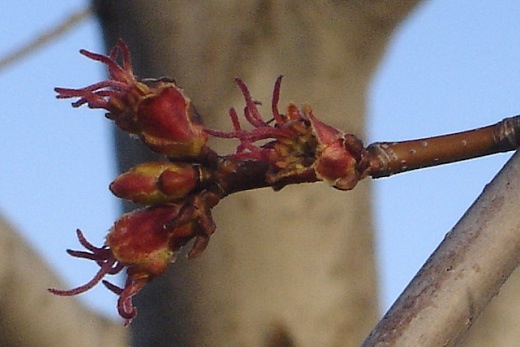
70 degrees!  Spent the weekend doing yardwork with the family.  Trees are budding all over the place.  It seems like forever since we last had that kind of heat.  Weatherman is calling for 70's from Wed. this week clear through Sat.  That's great news this time of year.  Soil temps around here are still only around 35 degrees at a 4" soil depth.  Water doesn't move through cold soils nearly as quickly as it does once the soils warm up a bit.  The surface has dried nicely.  Now all we need are a few sunny, warm days (preferably with some wind) and we will be ready to head to the field to begin applying our Anhydrous Ammonia (Nitrogen).

With a little luck we will get several good days of field work in before Easter.  When things go reasonably well, we can get around 500 acres/day of anhydrous applied.  That's important for our farm because we made a conscious decision around 10 years ago to put all our anhydrous on in the spring in order to limit environmental loss.  That decision creates a bit of a crapshoot every year weather-wise and that's why we get so excited to see early season warm temps.  Wish us luck!

And enjoy the weather!